|
Hey {{ first_name | default: "there" }},
Picture someone you love stepping off a plane in a country they've never seen. They've packed well. They've learned a few phrases. They know the food will be different and the clothes may be unusual, and they're ready for that.
Here's what almost no one tells them: food and clothing are the small part. Culture works like an iceberg. What you can see (meals, greetings, celebrations, dress) is just the tip. Underneath is the much larger part: how people think about time, what "yes" really means, and when it's ok to go against the flow.
This is the first issue of the Dimensions Series, twelve short weekly letters for future missionaries and the people behind them: parents, grandparents, siblings, leaders. Each week we take one piece of what's under the surface and make it simple enough to use today. This week is the map for the whole journey, so you'll know where we're headed. If you're a parent or grandparent, read it along with your missionary. You'll be surprised how much of this you will notice at home.
How this applies
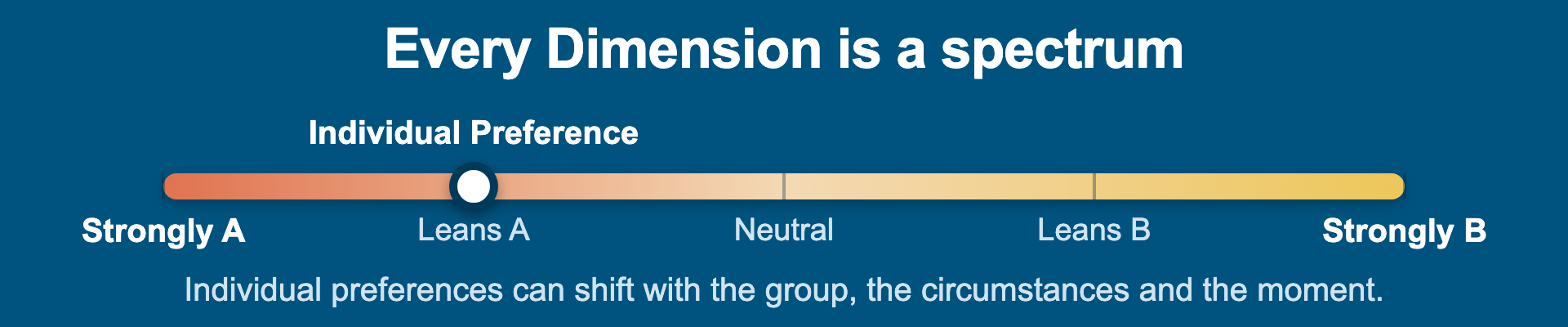
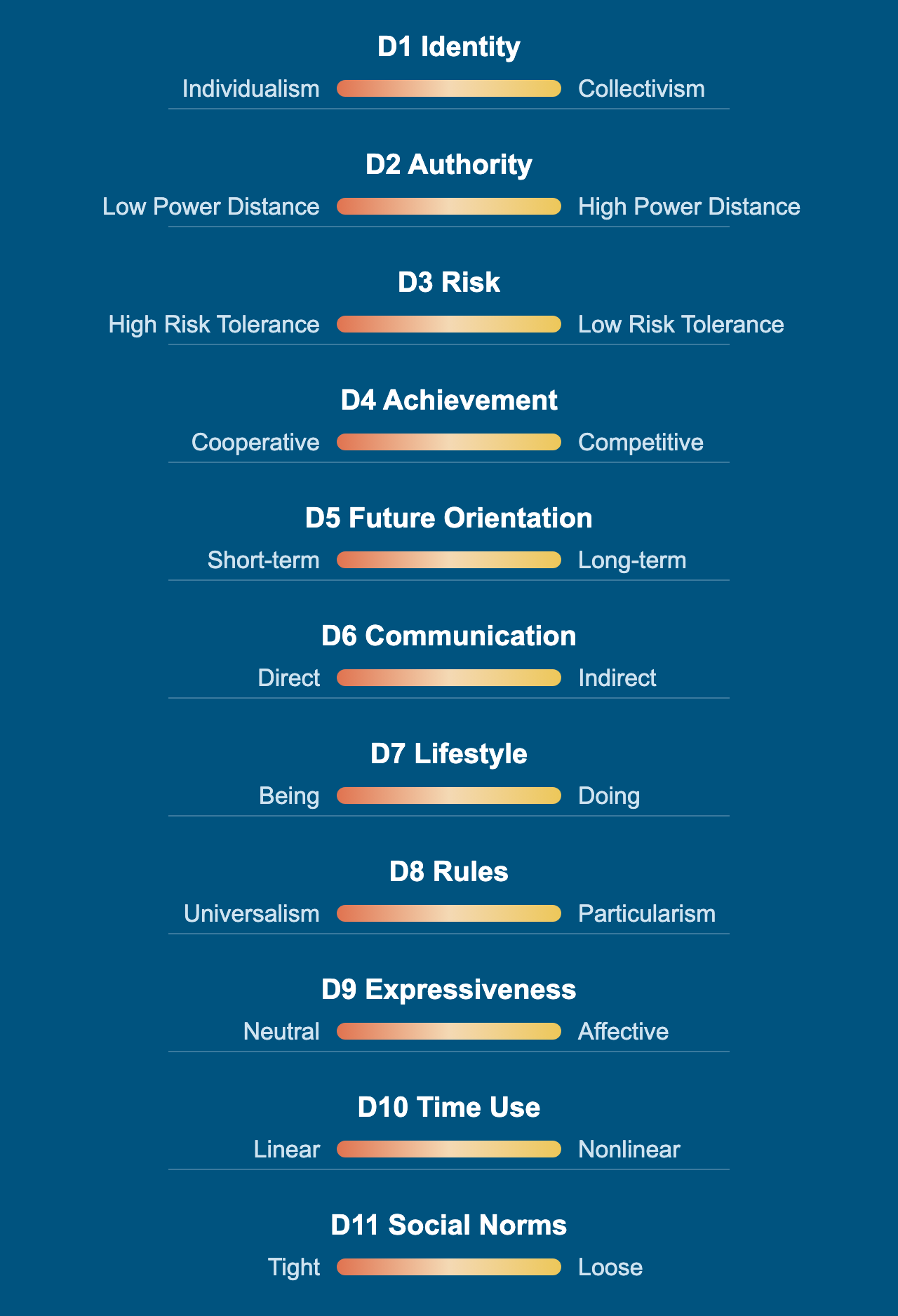
We call the pieces under the surface the 11 Dimensions of Culture. Each one is a spectrum with two ends, and neither end is better. Direct and indirect communication are both ways of showing respect. Planning ahead and going with the flow both work, in the right place.
Take one everyday example. In one home, a young person is praised for speaking up and making their own choices. In another, a young person is praised for putting the family's needs first and keeping the peace. Neither home is wrong. Each is passing on a way of being a good person. Put those two young people in the same apartment overseas, and you can already see where a misunderstanding could start, with nobody at fault.
That's the point of the Dimensions. They don't predict what a person is like. They give you a good question to ask when something surprises you: "What's going on under the surface here?" Over the next eleven weeks, we'll walk through one dimension at a time, with examples from different parts of the world.
Why this matters
Most people prepare for the tip of the iceberg. They learn the language basics, the foods, the do's and don'ts. That's good, yet it's not enough. The hard moments in a new place rarely come from using the wrong fork or wearing the wrong outfit. They come from a conversation where both people meant well and neither felt understood.
A missionary who can spot what's happening under the surface can stay kind, curious and steady when things feel strange. And the family back home can do the same on a video call, when a letter sounds different from what they expected, or when their missionary says, "It's just different here."
The Book of Mormon describes a people who got this right. In 4 Nephi, after the Savior's visit, the people did not contend because of the love of God in their hearts. They stopped dividing themselves into "-ites" of every kind and they were of one heart (4 Nephi 1:15-17). Understanding culture is one way we practice that kind of love: seeing past the differences on the surface to the person underneath.
Applying the 4 Cs
Throughout the series we'll lean on four simple habits. Think of them as the way you put the Dimensions to work.
|
🎯 Centered. Why do you want this relationship to work? Start there, and stay humble about your own way being the only default.
🔍 Curious. Which dimension is in play here? Learn to name it, and look for the one or two that are really driving the moment.
🤝 Considerate. What are my options? Slow down, notice how others handle similar situations, or ask a local who is willing to share the inside story.
💪 Confident. Choose an approach, try it, and see how it lands. If it misses, a sincere "I'm still learning" goes a long way.
|
You don't have to master all four today. Just know that they're the way we'll turn each week's idea into something you can actually do.
Try this week
|
You don't need a plane ticket to practice. This week, pick one small moment where someone surprised you, in a conversation, at a meal, or in a group chat. Ask yourself, "What might be going on under the surface here?"
Don't decide who's right. Just get curious. Families: try it together at dinner and compare notes. You may find your family is more different from each other than you thought.
|
What's next
Here's the road ahead, one dimension a week:
Next week we begin with D1 Identity: how much a person sees themselves as an individual, and how much as part of a group.
Thank you for being here at the very start. Preparing a missionary is a group effort, and I'm glad we're part of it.
If something in this letter made you think, or you have a question, just reply. I read every response.
Warmly, and see you next week,

Photo: Alexander Hafemann on Unsplash
|


Responses